A textile order touches everything a business does at once. Yarn is bought, fabric is woven, the dyeing goes out to a job worker and comes back, the goods are delivered against the order, the invoice carries GST, and the government wants an e-invoice and an e-way bill before the lorry moves. Most mills run that on four or five systems that do not speak to one another, and spend the month reconciling them.
This walks one order all the way through, in one set of records: fourteen thousand metres of dyed cotton, from the buyer’s order to the signed QR code on the invoice.
Which textile businesses this fits
Spinning mills selling yarn by the kilogram. Weaving and knitting units turning that yarn into fabric by the metre. Dyeing, printing and processing houses, who mostly work on someone else’s cloth. Garment and made-up units counting in pieces. Home textiles — bedsheets, towels, furnishings. And technical textiles.
Every one of them sends work out, or takes work in, as job work. That is the part most software handles badly, and it is where this walkthrough spends its time.
Set up once: units, HSN and the people you work with
A mill holds yarn in kilograms and fabric in metres, so the items carry their own units and the quantities never need converting in someone’s head. Each item carries its HSN code, and the GST rate follows the HSN — nobody types tax onto a line. Note the six digits: the e-invoice portal rejects a four-digit HSN, so it is worth getting right before the first invoice, not after.
The loom shed is a work centre, with its hours and its labour and overhead rate an hour, because that is what a metre of cloth has to absorb. And the dyeing unit is registered as a job worker — one switch, and the system gives it a stock location of its own.
What a metre of cloth actually costs
The bill of materials for grey fabric is where a mill’s costing is either right or guessed. It rolls up three things:
| Material, 0.22 kg of yarn a metre at ₹252, including the 2% the looms actually lose | ₹57.51 |
| Standard labour a metre | ₹4.50 |
| Standard overhead a metre | ₹3.00 |
| Cost to weave a metre of grey cloth | ₹65.01 |
One button recalculates the material side from the bill of materials whenever a yarn price moves, so the standard never drifts away from what the cloth really costs. And when the looms run, the labour and overhead the shed actually ran up are charged to that work order — the cost gathers on the job, not smeared across the month.
Out to the dyer, and still yours
Dyeing is not done in-house, so a second work order is raised and subcontracted at an agreed rate a metre. Sending the material prints a delivery challan and moves the grey cloth out of the mill into the job worker’s own location.
Look at what did not happen: it was not sold. It is still your stock, at your cost, sitting at the dyer’s — which is exactly what the GST rules expect you to be able to prove, and exactly what most systems cannot.
What comes back, including what went wrong
When the dyed fabric returns it is received against that challan, and three things are recorded together:
- the good metres;
- anything the dyer spoiled, as a rejected quantity with a reason against it;
- and the wastage itself — short ends taken back into your store as scrap at what they are worth, which comes off the value of the good cloth, and any cloth he did not use, returned out of his location into yours.
Nothing is written off quietly. The agreed dyeing charge is accrued the moment the goods are received, and when the job worker sends his own invoice, billing him clears that accrual exactly; anything he charges over or under lands in cost of sales rather than in a suspense account nobody looks at.
Then the number worth pausing on. The bill of materials for dyed cloth rolls up to the grey cloth alone. The item’s standard cost reads higher, because the job worker’s charge was added when the work came back. The cost of dyed cloth is the cloth plus the dyeing, built up from the documents — nobody worked it out on paper.
If job work is most of what your business does, there is a separate walkthrough on job work alone: sending out, receiving back, costing and billing.
Delivery, the invoice, and the portal
The delivery note is picked straight off the sales order — no re-keying, and the order closes itself as it is filled. The transporter carrying it is named on the dispatch, so the paperwork that follows already knows who is moving the goods.
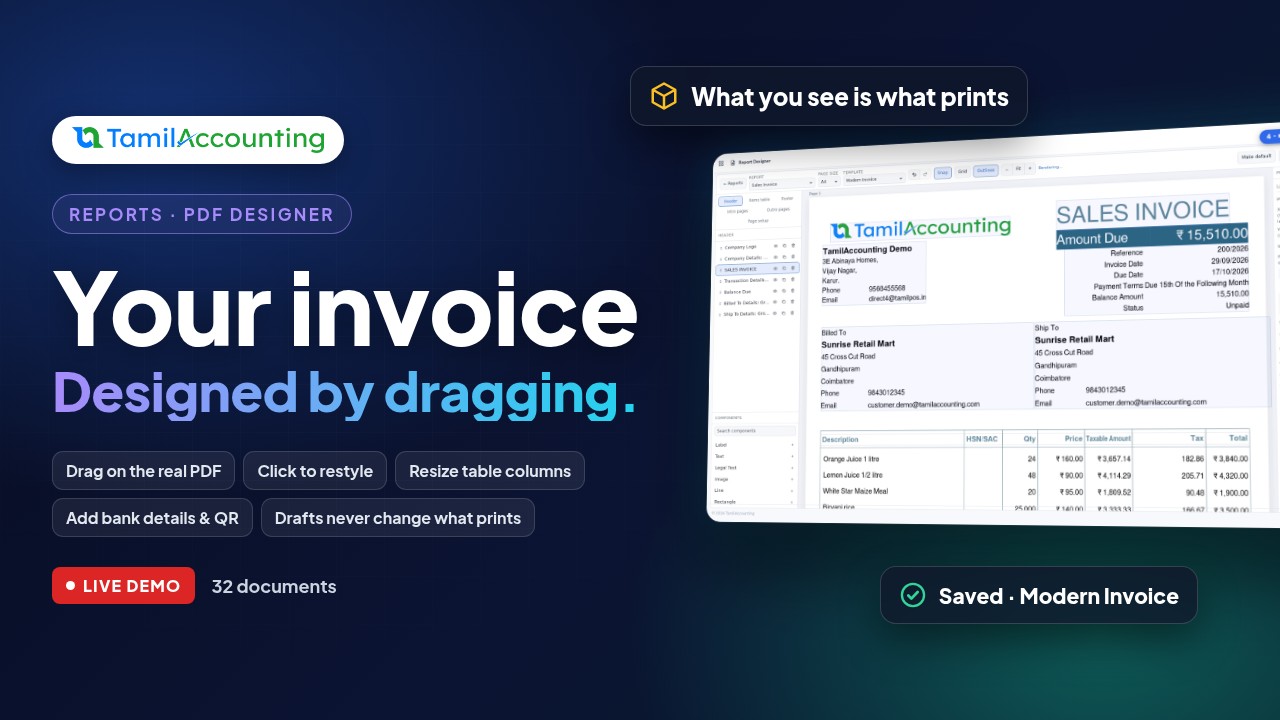
The invoice is raised from that delivery, with the quantities, the rate and the tax coming with it. It goes to the portal for clearance, and back comes the invoice reference number and the signed QR code that print on the customer’s copy. The e-way bill for the movement is raised from the very same invoice: the lorry number goes on, the portal works out the distance, and the bill comes back with the hour it expires.
The invoice, the movement and the clearance end up as one record, not three.
What the mill can then see
Because it is one system, the questions answer themselves. What this order cost to make and what was earned on it. How much cloth is sitting with which job worker and how long it has been there — the report that settles an argument at return time. What goes on this month’s GST return, built from the same invoices that did the work.
Why start on the whole thing
Every step above wrote its own accounting entry as it happened: the yarn into stock, the issue into work in progress, the labour and overhead onto the job, the dyeing into the cost of the cloth, the sale into revenue, the tax into the GST accounts and the receipt into the bank. Not one journal was typed.
That is the argument for starting on the full system rather than bolting pieces on later. A mill that begins with its orders, its looms, its job workers and its books in one place has nothing to reconcile and nothing to key twice — and it grows faster for it.